
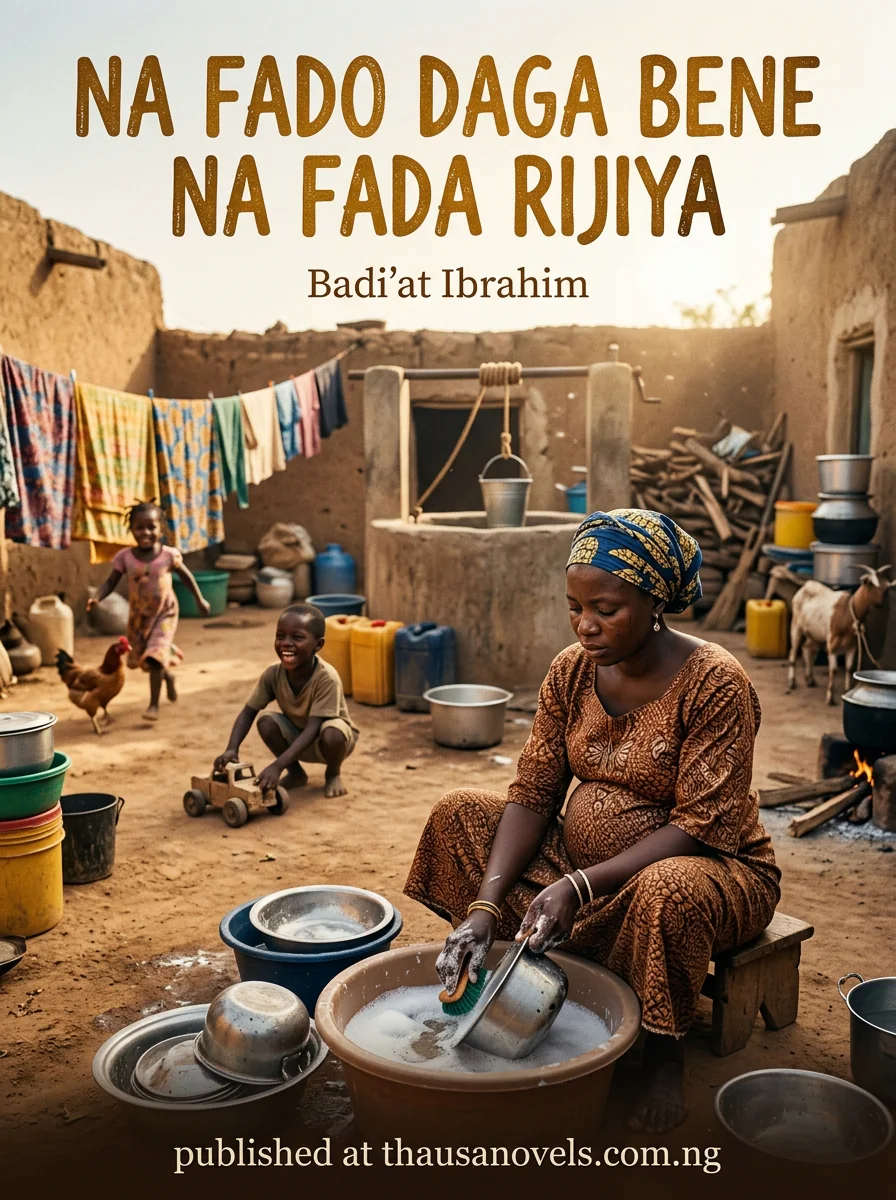
Have you ever felt like life is just throwing one heavy rock after another at you? That is exactly how Tani feels in this story. Life in Jos is not easy, especially when you are a mother trying to hold everything together while the world around you seems to be falling apart. The author, Badi'at Ibrahim, does a great job of showing us the real, messy, and sometimes painful side of living in a place that has seen so much history and so much conflict. If you are looking for stories that feel like they were pulled straight from the neighborhood, check out Taskar Novels for more.
The story starts by taking us right into the heart of Jos, a city that used to be peaceful but has been scarred by years of fighting between different tribes and religions. Tani lives in the Layin Dan Maraya area, a place with a lot of history. But for Tani, history isn't the main focus. Her life is about the pile of dirty dishes in her courtyard, the wet mattress smelling of pee that she has to drag out into the sun, and the constant worry about her marriage. She is heavily pregnant and exhausted, doing her best to take care of her kids while her husband is nowhere to be found in the daily struggle. It feels so real, like you are standing right there in the dusty courtyard with her.
One part of the book really hit home for me. It says — "I was washing the dishes and thinking about life, wondering if marriage just wasn't meant for me, or if this is how Hausa men have become, where marriage and divorce are like fashion trends." (translated from Hausa). That line just breaks my heart because you can see her pain. She is looking around her community and seeing so many women becoming widows or divorcees so quickly, and she just cannot figure out why everything is so broken. It makes you stop and think about the struggles so many women go through in silence.
The drama is not just about the big things; it is about the small, daily tensions too. You have Hajiyayye, the co-wife, who is busy cooking delicious food for the Sallah festival. You can practically smell the meat pies and fried chicken through the pages, but for Tani, that smell is a reminder of what she is lacking. There is this moment where Hajiyayye makes a loud, annoying sound with her mouth to show her dislike for Tani, and Tani just ignores her like she is deaf. It is that kind of quiet, petty drama that happens in shared houses all the time. You really feel for Tani when she has to choose between buying soap to wash the kids' clothes or saving those few coins for something else. When you want to find more stories like this, just head over to download Hausa novels and see what else is there.
Another part of the book that shows the struggle is when her son, Sulaiman, comes out to talk about the lice they found in his sisters' hair. It sounds like such a small thing, but it is a huge deal for a mother who is already stretched thin. She says to him, "Well done, my good boy, now let me give you one hundred naira to go buy shampoo, so I can wash their hair and they can go get their hair braided." (translated from Hausa). It is a simple moment, but it shows how she is trying to keep her children clean and dignified despite the poverty pressing down on them. She is a fighter, even when she feels like she is drowning.
Reading this made me think a lot about how we treat each other. The city of Jos is portrayed as a place that has been through so much—from the old days of farming and trading to the fires that burned down the markets and ruined the economy. The author really paints a picture of a place that is trying to heal but keeps getting knocked down. Tani is like the city itself; she is trying to keep her home together while everything else is in chaos. If you love reading about real people and their daily battles, you should definitely check out Hausa novels online to see the wide variety of stories available.
This book isn't just a story; it feels like a peek into a neighbor's life. You see the, the laughter of the kids, the smell of the cooking, and the weight of the worries in the air. It is not always happy, and it is not always easy to read, but it is honest. That is why I love it. It does not try to be fancy. It just tells the truth about what it is like to be a woman, a mother, and a person trying to survive in a difficult world. For anyone who appreciates the best Hausa novels that touch the soul and make you feel for the characters, this is one you should not miss.
I really hope you give this story a chance. It is raw, it is sad, and it is full of life. It makes you appreciate the little things you have and helps you understand the struggles of others. When you are ready to dive into more stories that are just as real and engaging as this one, remember that you can always find them at Taskar Novels.


