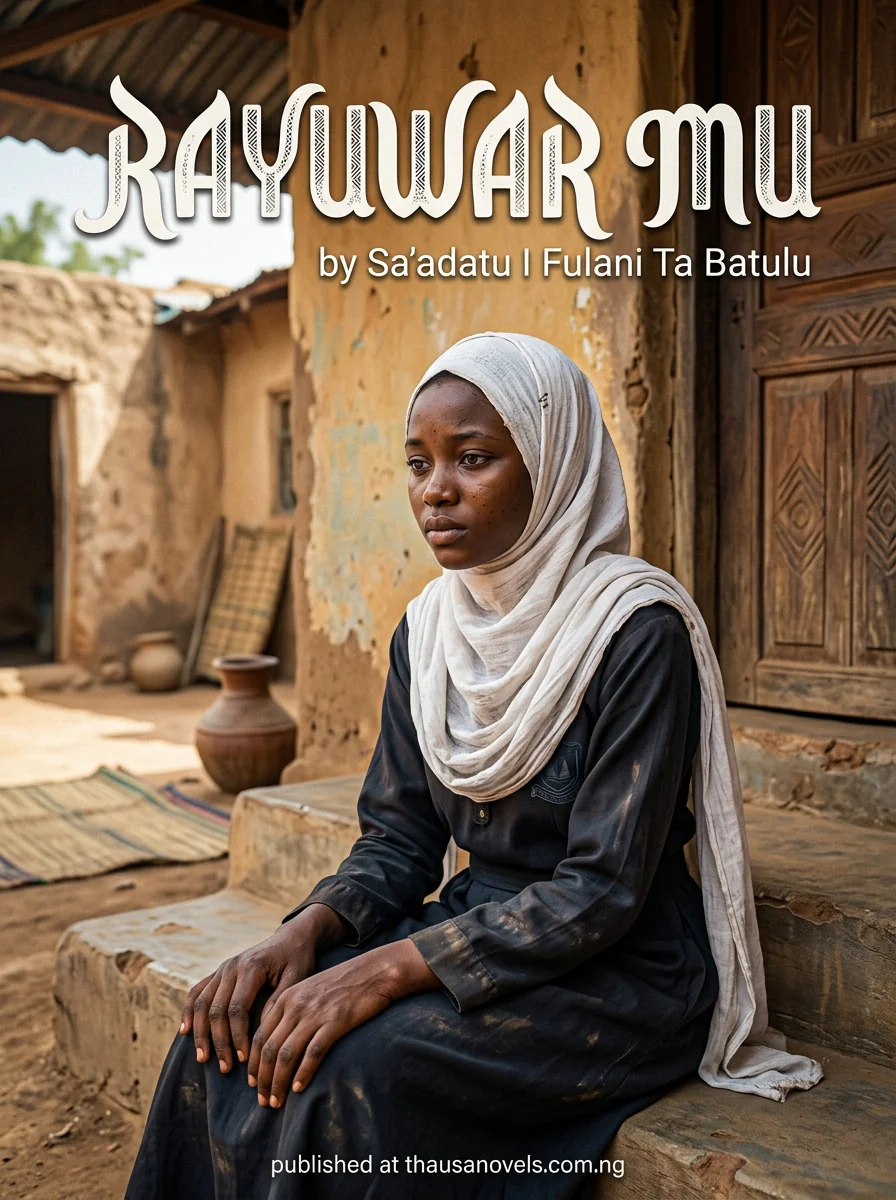
Imagine walking home after a long day at school, feeling like the whole world is resting on your shoulders. That is exactly how Shukrah feels at the start of this story. She is just eighteen years old, wearing her blue and black Islamiyya uniform with a white hijab that reaches her knees. Even though her clothes are faded and old, you can tell she takes care of them because they are sparkling clean. She walks slowly, her face looking tired, and when she finally gets to their small house with its two little porches, she just sits there for about nine minutes. She doesn't even want to go inside yet. It is like she is trying to catch her breath before facing the reality of her life again. This story, written by Sa'adatu I Fulani Ta Batulu, pulls you right into the middle of a family struggling to survive but staying together through it all.
When Shukrah finally enters the house and says her greetings, she sees her mother, Umma, sitting on a chair outside one of the rooms. It is heartbreaking because even though Umma is only thirty-nine years old, the hardship of life has made her look like she is well over forty. The house they live in is small and divided. There are only three rooms. One belongs to their father, one to Umma, and the third one belongs to their father's second wife. This setup alone tells you there is going to be some drama. You can almost feel the tension in the air as Shukrah looks at her mother. If you love stories that show the real side of life, you should check out where to download Hausa novels to see more like this one.
The living room is simple. There are only two sets of gray chairs that have seen better days, and a gray and black carpet that is faded but very clean. Everything in their house shows that they don't have much money, but they have a lot of dignity. Shukrah goes inside and just collapses on a chair, closing her eyes like she wants to disappear into sleep. But a house with many children is never quiet for long. Soon, her siblings Mudan, Darraini, and Manaheer come back home. Mudan is the youngest, the "Auta," and he is full of life. He starts complaining to Umma that Darraini was dragging him along the way, and they start their usual sibling bickering. It’s the kind of noise that usually makes a house feel like a home, but today, Shukrah is just too sad to join in.
Manaheer is the quiet one at first, mostly because she is hungry. She tells Umma, "I am so hungry I feel like I don't even have intestines anymore." It’s a funny way to put it, but it also shows how much they struggle. When the siblings realize Shukrah is in the bedroom and hasn't come out to greet them, they go in to find her. She is just lying there, staring at the ceiling, lost in her own thoughts. They try to talk to her, but she stays silent for a long time. Finally, she lets out all the pain she has been holding inside. One of the most emotional parts of the book is when she asks her sisters, "Are we going to keep living like this, with every day being just like yesterday? There is no progress in our lives." You can find many stories with this kind of deep emotion when you look for Hausa novels online.
Shukrah starts crying as she talks about how hard their mother works for them. Umma does everything—she provides their food, their clothes, and their medicine. She is their whole world, but she is suffering so much just to keep them going. The girls all start crying together, holding each other for about twenty minutes. It is a really heavy scene that shows how poverty doesn't just affect your stomach, it affects your soul too. They are interrupted when Umma comes in and finds them all in tears. She doesn't get angry; she just tells them that crying won't solve anything. One of the quotes that really sticks out is when Umma says, "If crying could fix problems, you wouldn't have any problems left in this world." She tells them to go and pray because only God can truly take away their worries.
Even though Umma acts strong for her kids, the story tells us that she is also struggling. She stayed with their father despite the hardships because of her children. She wants them to have a stable home, even if that home is full of challenges. After Umma speaks to them, the children get up to go perform their ablutions for prayer. This is where the tension with the other side of the family starts to boil over. As they are heading to the bathroom, Manaheer is about to enter when she is suddenly shoved aside by Mimah, the daughter of the second wife. Mimah is rude and doesn't care that she almost knocked Manaheer down. She just pushes past and slams the bathroom door shut, nearly hitting Manaheer’s foot.
Now, Manaheer is not the type of person to let things slide. She has a temper, and being pushed while she is already stressed and hungry is the last straw. Shukrah, who is watching, actually encourages her. She tells Manaheer that if she lets Mimah get away with this, then she isn't their mother's daughter. This is a real "it's about to go down" moment. If you enjoy reading about family rivalries and strong characters, you should definitely browse the best Hausa novels to find more gems like this. Manaheer waits by the door, her eyes red with anger, looking like someone who is ready for a fight.
As soon as Mimah opens the bathroom door, a huge scream echoes through the house. It is a total mess. Manaheer starts beating Mimah up, and she doesn't hold back. Shukrah is standing there cheering her on, saying, "Yes sister! Give her one last hit before Umma comes!" It sounds harsh, but it shows how much resentment has built up between the two sides of the family. Umma hears the noise and comes running out of her room, followed by Darraini. When Umma sees what is happening, she is shocked. Manaheer is actually about to pick Mimah up and slam her onto the ground when Umma yells at her to stop. Manaheer lets go, and Mimah falls to the floor like a pile of laundry, crying her eyes out.
Umma tries to handle the situation fairly. She helps Mimah up and tries to dust off her clothes, telling her she is sorry. But Mimah is so angry that she jerks away from Umma and runs into her mother's room. Meanwhile, Darraini is laughing and teasing Mimah, telling her she should go and put warm water on her mouth because of the beating she took. It’s a chaotic scene that perfectly captures the reality of living in a polygamous household where the children don't get along. Umma gives Darraini a look that makes her stop laughing and run into the room to hide. In the middle of all this drama, the author reminds us about the unpredictability of life. As the text says, "The journey of destiny is like the journey of death, wherever you go to run away from it, it will find you." This theme of destiny seems to be a big part of what happens next in the story.
After the fight, everyone settles down a bit, but the tension is still there. Manaheer goes to pray, and even though she just finished a fight, you can see she is still shaken. The story moves from this explosion of anger back to the quiet, sad reality of their poverty. They are all sitting in the room, and the cycle of their life continues. You really start to wonder if Shukrah’s fear is right—will they ever escape this cycle? Will things ever get better for Umma and her children? The way the author describes their feelings makes you feel like you are right there in the room with them, feeling the heat and the hunger and the hope. If you want to keep up with what happens to Shukrah and her family, you can find the rest of the story and other Taskar Novels online. This book is a real emotional rollercoaster that shows the beauty and the pain of family life. You can get the full book and many more just like it on Taskar Novels.