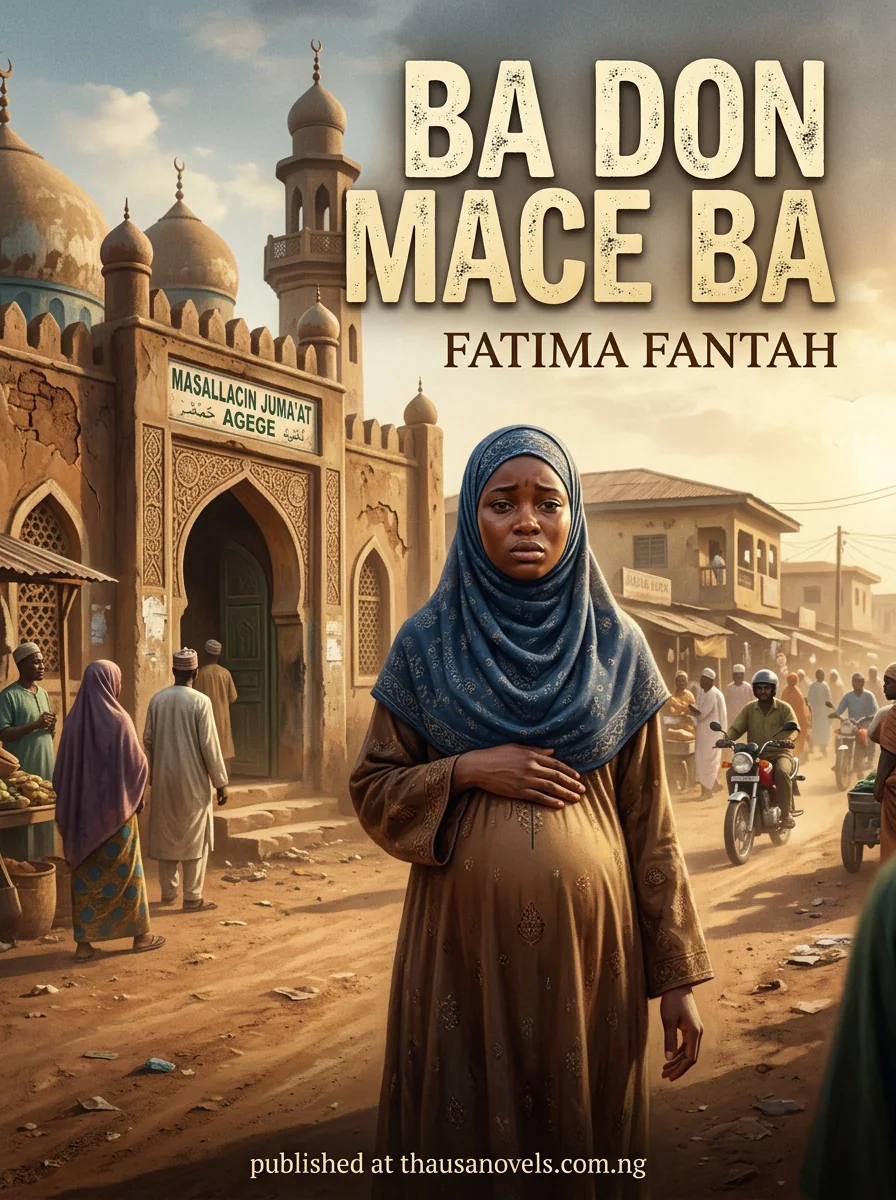
Imagine being all alone in a dark, broken-down room in the middle of a busy city like Lagos. That is exactly where we meet the main girl in this story. It is late at night, around 10:46 pm, and she is going through the kind of pain that makes you think the end is near. She is leaning against a cold wall, and her whole body feels like thousands of needles are stabbing her at the same time. She can’t even speak. She is just there, struggling to breathe, and her heart is calling out to God because she has no one else to turn to. This is how Fatima Fantah starts this heavy story, and honestly, from the first page, you can feel the weight of what this woman is carrying.
The pain is so bad that it feels like someone hit her head with a heavy hammer. She is pregnant, maybe about five months along, and she can feel the baby moving inside her like the little one is also feeling the pain. She is terrified. She doesn't want to die yet, not because she is afraid of death, but because she has a secret. There is a truth about her life that hasn't come out yet. One part of the book says — "Ya Allah kar ka kashe ni ba tare da gaskiyar lamarin rayuwata ya bayyana gare ni ba…" which means, "O Allah, do not let me die until the truth of my life is revealed to me." This makes you wonder what happened to her. How did a woman in her condition end up in a "kango" — a half-finished building — in a place like Agege? If you want to see how her journey continues, you can download Hausa novels to read the full thing.
As she struggles with the pain, blood starts dripping from her nose. She is so weak that she can't even move her finger. She just stays there, listening to the pain moving through her blood and bones. Eventually, the pain starts to go down a little bit. She manages to crawl to a small mat on the floor and falls asleep from exhaustion. When she wakes up around 4:37 am, the world is still quiet. She gets up to pray, even though she is so weak. She is the kind of person who finds strength in her faith. She talks to her unborn baby in a way that will really touch your heart. She calls the baby "abun kauna" (my love) and tells the little one to be patient because this world is just a place of trials. She promises the baby that one day, all this suffering will just be a story they tell. It is so sad but also beautiful to see a mother trying to comfort her child even when she herself is broken.
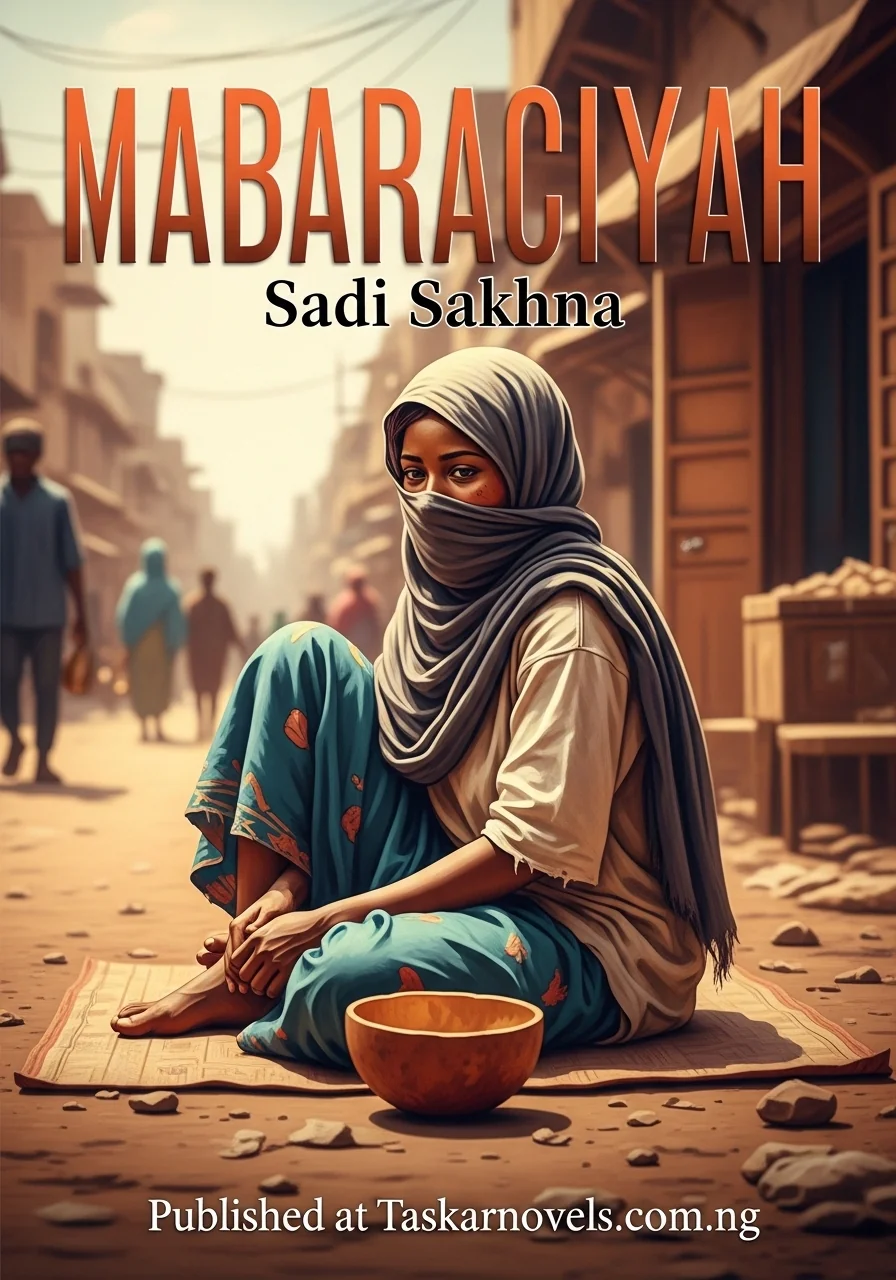
Life for her in Agege is not easy at all. She lives in a house owned by an old man. He has a son named Ayuba and a daughter named Saratu. Ayuba is a good guy. He is the one who let her stay in that unfinished room. He sees her as someone who doesn't talk, so he just respects her space. His sister Saratu is different; she stays out late and doesn't seem to care about much. Our main character doesn't have a job. Every morning, she goes out to the main road to beg. That is how she eats and how she survives. It is hard to imagine a young, pregnant woman standing in the hot sun of Lagos, waiting for people to drop small change in her hand. You can find more stories like this when you search for Hausa novels online.
One day, while she is at her usual spot near the Ipaja road mosque, a very expensive Mercedes Benz pulls up. You know that kind of car that just screams wealth? Everyone who is begging runs toward the car, hoping for a big gift. But she stays back. She doesn't have the strength to fight or push through the crowd. The guy in the car notices her. He is young, handsome, and looks like he has never lacked anything in his life. He calls her over and asks her, "Are you also a beggar? Don't you have a husband? You are too young and you are pregnant." He is surprised to see someone like her on the streets. He gives her 12,000 Naira, which is a lot of money for someone in her position. But what is interesting is what she does next. She doesn't keep all the money. She keeps 8,000 and gives the rest to another woman who is also begging. This shows you the kind of heart she has. Even in her poverty, she still thinks of others.
The story then takes us away from the dusty streets of Agege to a very different place in Katsina State. We see a huge, beautiful house in the New G.R.A. area. There is a couple there who seem to be living the dream. They call each other "My Boo" and "My Shona." They are millionaires, almost billionaires. The woman is acting all sweet and spoiled, telling her husband she doesn't want him to leave. This part of the story feels so different from the life of the woman in Lagos. It makes you ask so many questions. Who are these people? Is there a connection between this rich couple and the poor pregnant woman begging in Agege? The contrast is just too much, and you can tell that Fatima Fantah is setting up a big mystery. If you love stories with big twists, this is one of the best Hausa novels you can pick up right now.
There is a very deep thought the main character has at the beginning of the book that sticks with you. She says — "Ciwon 'ya mace, na 'ya mace ne... wata 'ya macen takan zamo silar zubar hawayen 'yar uwarta mace." This translates to "The pain of a woman is for a woman... but sometimes, it is another woman who causes her fellow woman to cry." This tells us that whatever happened to her, another woman might be the reason for her pain. Maybe it was a mother-in-law, a co-wife, or even a friend. It makes the title "BA DON MACE BA" (If not for a woman) make so much sense. It shows that women have the power to support each other, but they also have the power to destroy each other's lives. It is a very emotional way to look at life, and it makes you want to keep reading to find out who did this to her.
The way the story moves between the struggle in Lagos and the luxury in Katsina keeps you on your toes. You find yourself rooting for the woman in Agege, hoping she finds her way out of that "kango" and that her baby is born healthy. You also find yourself suspicious of the happy couple in Katsina. Why are they so rich? Is their happiness real? The drama is real, and the feelings are so raw that you might even shed a tear while reading. It is not just a story about being poor; it is a story about secrets, about the things people do for money, and about the strength of a woman who has been pushed to the edge. You can find this and many other stories on Taskar Novels.
As the story goes on, you will see how she deals with the people around her. Ayuba is like a small light in her dark world because he is kind to her without asking for anything in return. But you can tell she is always looking over her shoulder. She is hiding from something or someone. Every time she talks to her belly, you feel the love she has for her child. She wants that baby to meet its father, but we don't know who the father is yet. Is he the guy in the Mercedes? Or is he someone back in the life she fled from? The suspense is what makes this book so hard to put down. You just want to know the truth as much as she does.
If you want to follow this emotional journey and find out what happens to this brave woman and her baby, you should definitely check it out. It is a story that shows us that no matter how bad things get, there is always a reason to keep moving. Whether she is walking the streets of Agege or remembering the life she used to have, her spirit is strong. You can get this novel and many other amazing ones like it on Taskar Novels. It is the best place to find all your favorite stories and keep up with new releases from great authors. Go there now to see how this mystery ends!