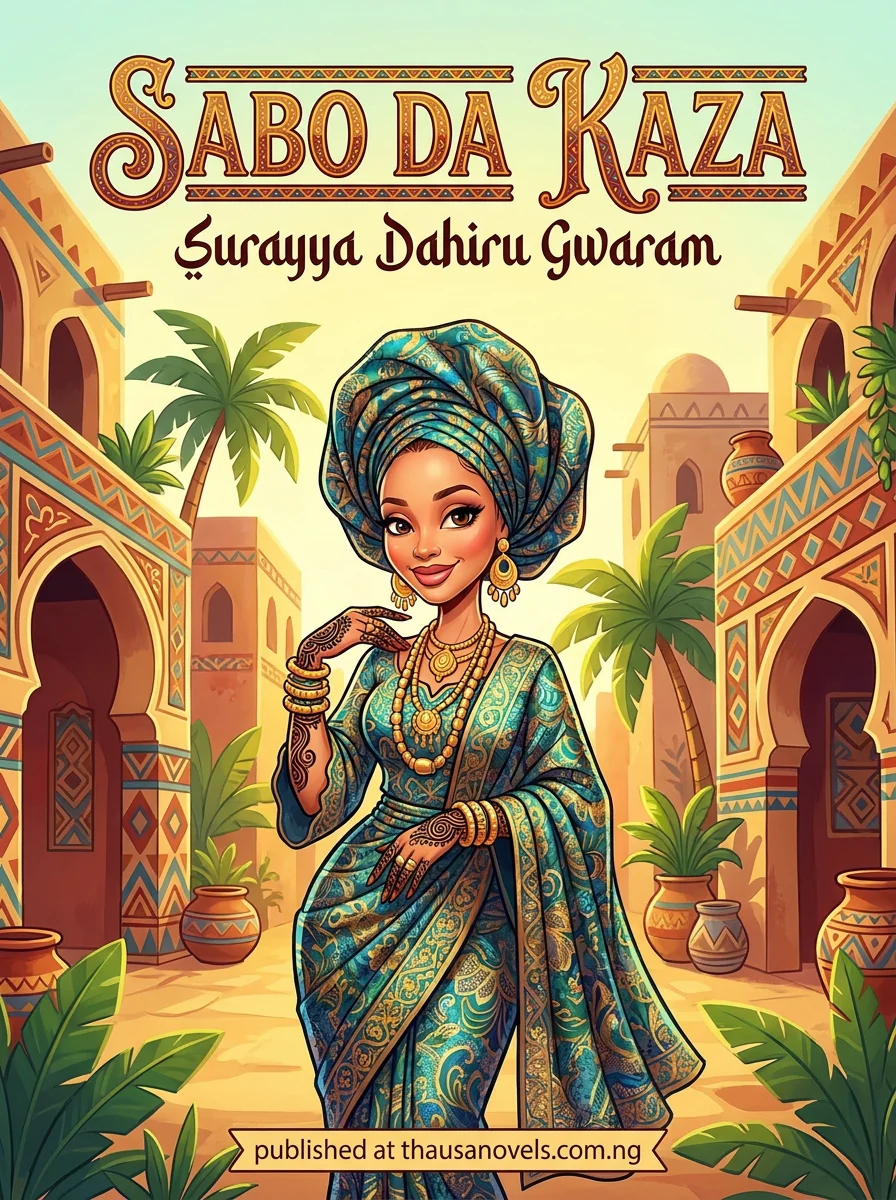
Imagine a big family house in Kano where everyone lives together, but behind the closed doors and the smiles, there is so much drama going on. This story starts with a man named Alhaji Zubairu Lawal Moriki. He was a simple man from a small village called Moriki in Zamfara State. He was a mix of Hausa and Fulani, a very fair-skinned and handsome old man who grew up with strict Northern values. He spent his life trading cattle, and that business eventually brought him to Kano. He liked the city so much that he moved his whole family there. He and his wife Maimuna had five children who survived, even though they lost many others when they were babies. This grandfather is the root of everything, and his legacy is what shaped the lives of his children and grandchildren in this book.
The eldest child was Hajiya Hafsatu. Everyone called her Yaya ta Kwalli. She was a very kind woman, but she never had children of her own. Instead of being bitter, she poured all her love into her siblings' children. Her brothers even gave her two kids, Ramla and Ashir, to raise as her own. She was the kind of person who hated seeing a family fight. If she saw a small crack in the family relationship, she would do everything to fix it. But she wasn't someone you should play with either; if you crossed her, she could be very tough. She is the peacemaker of the Moriki family, and you can really see how much she cares about keeping everyone together in best Hausa novels like this one where family ties are everything.
Then there is the second child, Alhaji Abubakar Moriki, who everyone calls Abba. He is the star of the family. He is very religious and highly educated. He even went to Sudan for his first degree and then to Egypt to study Sharia law. He became a very wealthy businessman, trading things like zobo and gum arabic across Africa. If you were listing the richest men, you would definitely put his name there. He is married to Hajiya Saude, also known as Umma. She is from Yola, and man, she is beautiful. She is fair-skinned with long hair, looking almost like an Arab woman. But the problem is that Umma is very proud. She feels like since her husband is the pillar of the family, she is better than everyone else. She hates it when people get too close to them.
The real tension starts because of the children. Umma has five beautiful daughters—Hafsat, Maimuna, Juwairiya, Ramla, and Sakina. They are all tall and fair like her. But even though she has these healthy, beautiful girls, Umma is not happy. She is obsessed with having a son. She feels like her life isn't complete without a boy. This is where things get messy because the youngest brother, Ibrahim, is married to a woman named Safiyya, or Mama. Now, Mama is just a simple woman from Kano, not as rich or "classy" as Umma. But Mama has something Umma wants desperately: sons. In just a few years, Mama gave birth to three boys in a row—Abdallah, Azzubair, and Ammar. This made Umma so jealous she couldn't hide it anymore.
The author, Surayya Dahiru Gwaram, really shows us how jealousy can eat a person up from the inside. One part of the book says — "Her biggest heartbreak was how she stopped giving birth while someone else came and was having boys every year." (translated from Hausa). This was about Umma looking at Mama. It didn't matter that they used to be friends or that Mama was always respectful to her. Umma started treating Mama like an enemy. She would stop her kids from going to Mama’s part of the house. When Abba wasn't home, she would say mean things and make Mama feel like a stranger in her own home. Mama is the patient type, so she didn't even tell her husband about the bullying for a long time. She would just stay in her room with her kids to avoid trouble.
The drama gets even more intense because Abba, the rich brother, loves Mama’s sons like they are his own. He doesn't treat his daughters differently, but he really bonded with Mama’s oldest son, Abdallah. Whenever he travels, he buys things for all the kids. He bought bicycles for Abdallah and his brothers, even though he didn't want his daughters riding bikes. He takes Abdallah with him to weddings and everywhere he goes. To Umma, this was like a slap in the face. She felt like Mama was using "medicine" or charms to make the husband love her kids more than his own daughters. It’s the kind of household drama you can only find when you download Hausa novels and see how people deal with family rivalry.
Eventually, Umma gets pregnant again. She goes for a scan, and they tell her it’s a boy. She is so happy! But then she gives birth, and it’s another girl, Sakina. She was so disappointed she couldn't even hide it. Then, ten months later, Mama gives birth to another boy, Al'amin! You can imagine the fire in the house. Umma made Mama’s life a living hell. She would only do her "evil" acts when Abba was away on his business trips. When he was around, she acted like a perfect wife. But as soon as he left, the house became a war zone. Poor Mama had to hide in her room just to have peace. It shows how much pressure some women feel to have male children and how it can ruin relationships between sisters-in-law.
Finally, Umma gets her wish. She gives birth to a baby boy named Abubakar, but they call him Sadik or Gudale. He looks just like her—fair and with lots of hair. But instead of this making her a better person, she becomes even more difficult. She spoils the boy rotten. The book says — "The way she raised Abubakar was totally different from her other kids; she gave him a kind of special treatment like she had never had a child in thirty years." (translated from Hausa). She wouldn't let him do anything for himself and treated him like a little king. Even when her husband tried to tell her she was going to ruin the boy's character, she wouldn't listen. She was just so happy she finally had her "own" boy to compete with Mama’s sons.
As the kids grow up, the house is full of different personalities. You have the cousins who are like brothers and sisters, but there is always that underlying tension because of the mothers. Some of the older girls start getting married and moving away, like Hafsat who moved to Zaria to be with her husband who is a lecturer at ABU. But the core of the story is really about this competition and how the kids navigate the love and hate in the family. It is a deep look at Northern Nigerian family life, the good, the bad, and the ugly. You really feel for Mama and her sons, but you also see how Umma’s pride is setting her up for a fall later in life. If you want to see how these kids turn out, you should definitely check out more Hausa novels online.
The title "Sabo Da Kaza" really fits because it talks about how being too familiar with something can lead to problems. It’s like the proverb about the chicken and the knife. The characters are so real, and you will find yourself getting angry at Umma and cheering for Mama. The writing is very smooth, and the way the family history is laid out makes you feel like you are a member of the Moriki family watching everything happen from the sidelines. It is a story about patience, jealousy, and the complicated way we love our families even when things are hard. You can find this amazing story and many others by Surayya Dahiru Gwaram on Taskar Novels. It is the best place to get all your favorite books and enjoy stories that feel like home.