Imagine standing in a narrow, hospital corridor, the kind where the air feels heavy and everyone is just waiting for news. That is where we find Tani, pacing back and forth, her heart beating fast because her younger sister is inside the labor room struggling to give birth. But while Tani is worried about life and death, her mother-in-law, Inna Uwale, is sitting on a mat nearby thinking about something totally different. Inna Uwale is one of those characters you will either love to hate or just shake your head at because of her Wahala. She is obsessed with skin color. She doesn’t care if the baby is healthy or not; she just wants a "white" grandchild. She actually sits there, raises her hands to the sky, and starts praying out loud. One part of the book says — "Ya Allah ka bani farin jika ko wanne iri ne. Ya Allah fari kyakkyawa kamar ni." This translates to "Oh God, give me a fair-skinned grandchild of any kind. Oh God, one that is fair and beautiful like me." Can you imagine? Her daughter-in-law is in pain, and all she cares about is the baby’s complexion.
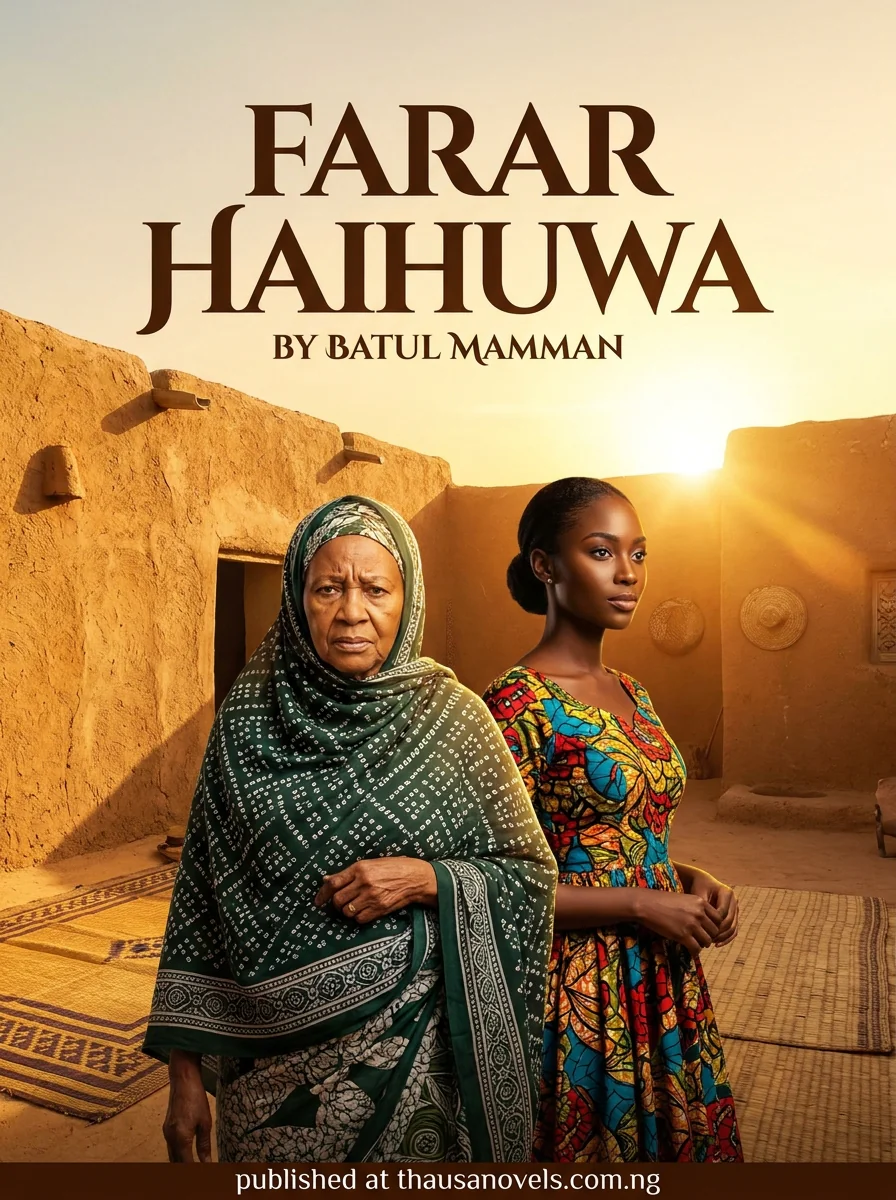
The drama in this story, written by Batul Mamman, starts right there at the hospital. Tani, who is Munari’s sister, eventually gets fed up. She looks at Uwale and tells her straight that she has no shame. How can you be praying for a fair-skinned baby when the mother’s life is literally in God’s hands? But Uwale doesn't care. She thinks she is the most beautiful person because she is light-skinned, and she blames her son, Mal Yakubu, for marrying Munari, who is dark-skinned. When Yakubu finally arrives at the hospital, he is dripping with sweat because he had to walk all the way from the farm after hearing the news. He is a good man, but he is stuck between a mother who is very difficult and a wife he loves so much. You can see the pain in his eyes when his mother starts insulting his children right there in public. His kids, Ramlah and Sadi, are just little children, but Uwale treats them like they are not even hers because they took their mother’s dark skin. She even pushes little Ramlah down just for stepping on her foot, calling her a "black, ugly girl." It’s really heartbreaking to see how some people can be so mean over something like skin color.
If you want to read more stories that touch on family issues like this, you can download Hausa novels to see how different authors handle these themes. Anyway, back to the story. The tension in that hospital is so high you could cut it with a knife. Uwale keeps talking and talking, telling everyone who would listen that she tried to stop the marriage. She even says she once pretended to be sick just so Yakubu wouldn't marry Munari. She calls Munari's family "black people of poverty." To her, being light-skinned is the same thing as being rich or successful. She even makes a big promise to the people sitting around that if Munari gives birth to a fair child, she will personally do the nursing care for the mother. She is so sure that the "blackness" of Munari is a curse. It makes you wonder how Mal Yakubu has survived living with this woman all these years without losing his mind.
Then the nurse finally comes out. Everyone freezes. The nurse says Maimunatu (Munari) has given birth safely. Uwale jumps up, not asking if her daughter-in-law is okay, but asking "Is the baby white? Tell me the truth!" The nurse doesn't even answer her at first because she sees how crazy the woman is acting. When they finally see the baby, Uwale is over the moon. The baby is a boy, and he is very fair-skinned. She starts celebrating, shouting, and telling her friend Zulai that her prayers have been answered. She thinks she has finally gotten what she wanted. She even starts saying the baby looks like her own father and that he is going to be the one to take her to Mecca. But then, the mood changes. Zulai, her friend, notices something is wrong. The baby isn't moving. He isn't crying. The joy disappears in a second when they realize the baby is stillborn. The book says — "Yaro ga shi fari kato ga kyau amma bai zo da rai ba." This means "The boy is fair and big and handsome, but he didn't come with life."
This is where the real bitterness of Inna Uwale shows. Instead of mourning the loss of her grandson or comforting Munari, she turns into a monster. She blames Munari for the baby’s death. She says Munari's "dark intention" killed the beautiful, fair baby. She packs her things and leaves the hospital in a rage, telling Yakubu that this is the end. She tells him he must marry another woman, someone fair-skinned, because she won't allow him to keep having "black" children. The way she treats Munari in her moment of grief is just cold. Poor Munari is lying on the hospital bed, crying for her lost child, while her mother-in-law is busy planning how to replace her. You can find many stories with this kind of emotional family drama when you search for Hausa novels online. It really shows the struggles many women face in their matrimonial homes.
Mal Yakubu is devastated. He loses his son, and now his mother is making his life a living hell. He goes to Munari’s bedside and tries to comfort her. He is so afraid that this drama will break his marriage. He knows Munari's family might get angry and take her away because of how she is being treated. There is a very emotional moment where he begs her not to leave him. He says — "Maimunatu bazan iya rayuwa da wata mace ba bayan ki. Don girman Allah kada ki bari a raba mu." This means "Maimunatu, I cannot live with any other woman except you. For God's sake, don't let them separate us." You can really feel his desperation. He loves his wife, but his mother is like a storm that won't stop blowing. Munari, being the patient woman she is, just smiles and tells him that only death will separate them. But you know that in these novels, things are never that simple.
While Yakubu and Munari are trying to heal, Inna Uwale and her friend Zulai are already plotting. They don't waste any time at all. Uwale tells Zulai to find her a fair-skinned divorcee for Yakubu to marry. She doesn't care if the woman has children already; as long as she is "white," she is good enough. Zulai, who is also looking for a way to benefit, thinks of her own daughter, Sabuwa. Sabuwa is fair-skinned, but she is currently married to a man named Inuwa. They are very poor and always fighting because there is no food in the house. Zulai decides that she will force her daughter to divorce her husband so she can marry Yakubu. It’s a very wicked plan. She goes to Sabuwa’s house and finds them arguing. Instead of settling the fight like a mother, she starts insulting Inuwa and tells him to divorce her daughter immediately.
Sabuwa is confused. She tells her mother that even though they are hungry, she still loves her husband. But Zulai is not having it. She pulls her daughter into the room and tells her about the plan to marry her off to Yakubu. She tells Sabuwa that her fair skin is an "asset" and she shouldn't waste it on a poor man like Inuwa. She promises her that if she marries into Uwale’s house and gives birth to a fair child, they will be able to control Uwale and get whatever they want. It is a game of greed and obsession. Sabuwa is hesitant at first, but her mother is very manipulative. This part of the story shows how some parents can destroy their children's happiness just because they are looking for money or status. For more interesting stories like this, you should check out the best Hausa novels available on the internet today.
The story of Farar Haihuwa is really about the pressure women face and how society sometimes values outside beauty more than a good heart. Munari is a wonderful wife and mother, but to Uwale, she is nothing because she is dark. Sabuwa is being pushed into a marriage she didn't ask for just because she is light-skinned. Mal Yakubu is caught in the middle of all these women, trying to do the right thing while his mother is busy causing fire everywhere. You really feel for the characters because the situations they are in are so real. Many people actually face these kinds of problems in real life, where family members interfere in marriages and cause unnecessary pain. It makes you want to keep reading to see if Munari will finally get the respect she deserves or if Uwale's plan to bring in a new wife will actually work.
If you are a fan of drama, family politics, and stories that make you think about life, you will definitely enjoy this one. The way the author describes the emotions of the characters makes you feel like you are standing right there in the room with them. You can feel the heat of the hospital, the sadness of the loss, and the anger of the insults. It is a very touching story that shows that "white birth" or "fair skin" doesn't always bring the happiness people think it will. If you want to read the full story and see what happens to Munari, Yakubu, and the wicked Inna Uwale, you can find it and many other amazing books at Taskar Novels. They have a huge collection of stories that will keep you entertained for a long time.